Translate

Jan 17, 2011

Why does health care in Cuba cost 96% less than in the US?


From: frank scott <frankscott@comcast.net>
Date: January 17, 2011 8:15:46 PM EST
Subject: Why does health care in Cuba cost 96% less than in the US?

http://links.org.au/node/2082


email: 
frankscott@comcast.net


 Frank Scott writes  political commentary which appears in print in The Independent Monitor and online at the blog Legalienate


http://legalienate.blogspot.com


__._,_.___
Recent Activity:
.

__,_._,___

The Holocaust Debate: Finally, some clear thinking., April 6, 2009


226 of 270 people found the following review helpful:
5.0 out of 5 stars Finally, some clear thinking.April 6, 2009
Amazon Verified Purchase(What's this?)
This review is from: Debating the Holocaust: A New Look At Both Sides (Perfect Paperback)
As a skeptic of both sides of the Holocaust debate - was there or wasn't there, and if there wasn't, then what? - I've long hoped for a book that would shed light where there was only heat. DEBATING THE HOLOCAUST comes as close as I can hope for, and it is a remarkable accomplishment. 

Rather than writing a review longer than the book itself, I'll just first note that with Thomas Dalton's book, the biggest single problem has finally been addressed, That It Has Been Impossible To Grasp The Big Picture Of The Holocaust Because Of The Incoherence Of The Story. The goals of Nazi policy, the means by which it was ordered and carried out, major events and where they happened (nobody really knows where the burial and cremation grounds of Chelmno are), the technical challenges that would come with a mass extermination effort, even something as basic as the death totals; nothing about the Holocaust story is consistent from one source to another. Over the decades figures, testimonies and documents have been exaggerated, reduced, misrepresented, changed or even disappeared, and in many cases with the obvious goal of keeping certain details a mystery so that awkward questions don't come up (Saul Friedländer - I'm talking to you!). When Dalton writes that he found "...a Holocaust story in tatters..." he simply states the truth, and it is easy to see why two important historians, Michel De Bouard and Jean-Claude Pressac, remarked that the historical record of the Holocaust is "rotten". 

To deal with this, Dalton introduces a remarkable (and easy!) analytic tool which he calls the death matrix, a technique that combines various tables into a single analytic field that clearly demonstrates the properties of any account of the six alleged extermination camps. It can be done by anybody who has a spreadsheet option on their computer. Not unique to Dalton, it's a common tool in several technical fields, and you have to wonder why anti-revisionist John Zimmerman, who is a professor of accounting and has to use similar tools in transaction analysis, never used it in his various refutations. 

For the reader, this means a book where you have to take pen to paper and do some homework of your own, but that is a refreshing change to Holocaust books which don't just ask but demand that you swallow whatever they say without question. Dalton's results when he applies his death matrix are clear, transparent and easily understood, but Dalton clearly states that certain data rests on questionable assumptions and that his use of the tool is preliminary and needs refinement (I could already suggest a revision where Dalton credits Krema II at Auschwitz with cremating 11,000 bodies at a time when it was out of service, the six weeks from the beginning of May through June 12 of 1943). It's a terrific tool, something that becomes clear when the tables reveal that the combined work of exhumations and cremations at Belzec had no choice but to run at a rate of 92,000 per month. That's better than 3,000 per day, 125 per hour, a corpse dug out of the ground and thawed and burned to fragments and ground to powder every 30 seconds; and on wooden pyres in the dead of a Polish winter when weather conditions would have frozen the ground rock-solid and rendered many days impossible for work. That account is ridiculous; whatever the truth is, it's something else. Why didn't somebody think of this technique before? 

Avoiding the dreary name-calling, Dalton divides the two camps into "traditionalists" and "revisionists", and then divides the revisionists into the "agitators" and "academics". Another good idea where ideas are sorely needed; when it comes to the revisionists Dalton intelligently ignores the "agitators" and concentrates on the solid arguments of the academics. Revisionists who have made it some sort of holy crusade to challenge the Holocaust will not be happy with this book. Dalton clearly states that the Holocaust cannot be dismissed as a hoax, a fraud or a conspiracy (the financial exploitation of it and the loathsome criminalization of challenging it are another matter). Something awful happened, but exactly what it was, and how it fits into the even bigger picture of the Second World War is impossible to determine with the history that we have. 

As accessible as a book that addresses technical issues can be, DEBATING THE HOLOCAUST would make an excellent high school textbook, teaching young people about the story while challenging them to accept nothing until they've applied their own brains to it. Certainly a better choice than THE DIARY OF ANNE FRANK, a book which has nothing in it about the Holocaust but nevertheless is required (forced?) reading on the subject. 

While my review lists five stars, I'm actually giving it four and a half, with half a star taken off for listing a large percentage of the deaths at Majdanek as "natural causes" in one of the tables. This is insensitive to say the least. In their 2003 book on the camp (one of only two studies ever made!) revisionists Carlo Mattogno and Jurgen Graf, no defenders of the Holocaust, are themselves aghast at the way some 40,000 people died slow deaths of exposure standing in the open, sewage soaked fields. These are not "natural causes". As a police worker I know that "Official Indifference" is a crime that American police, fire and rescue workers can be charged with, so even if the Nazi's didn't intend to kill these people they are responsible, at the very least, for mass manslaughter. 

With that unfortunate beauty mark addressed, I can finish with a preview of Dalton's epilogue, which is depressing. Dalton points out that there is an appreciable amount of common ground between traditionalists and revisionists; no academic revisionist has ever denied that tragic atrocities happened, and the best (and bravest) traditionalists have themselves noted that there is something terribly wrong with the history, which suggests that a combined effort between the two camps holds an excellent possibility of finally bringing to light a clear and coherent picture of what the events of the 1940's really were. 

But it ain't gonna happen. As B'nai Brith director Ian Kadegan ominously crows, "The memory of the Holocaust is central to The New World Order" , and goes on to obscenely call it "...Western Civilization's greatest failure" (that would actually be the Congo CorvĂ©e, something that only die-hard Mark Twain fans have heard about). The traditional story of the Holocaust is a multi-billion dollar cash cow that enriches some of the most corrupt institutions on Earth, and has truly become an idolatrous religion that too many people are staked in. If the traditional story falls, not only reputations and livelihoods but power will be lost, for the traditional Holocaust story is used as a club to dictate what morality is by people who have no authority to do so, and to intimidate them not to question that authority. 

Which means reading this book is may actually qualify as a revolutionary act. The enemies of free speech can exact a price, but they can't stop you. That's why the right is called unalienable. Not even God can take it away. Thanks for the book Thomas. 
Help other customers find the most helpful reviews 
Was this review helpful to you? Yes No


Link:

http://www.amazon.com/Debating-Holocaust-Look-Both-Sides/dp/1591480051/ref=pd_bxgy_b_img_a

__._,_.___
Recent Activity:
.

__,_._,___

Faurisson affair - Wikipedia, the free encyclopedia


http://en.wikipedia.org/wiki/Faurisson_affair

Peace.
Michael Santomauro
@ 917-974-6367

What sort of TRUTH is it that crushes the freedom to seek the truth?

__._,_.___
Recent Activity:
MARKETPLACE

Stay on top of your group activity without leaving the page you're on - Get the Yahoo! Toolbar now.


Get great advice about dogs and cats. Visit the Dog & Cat Answers Center.

.

__,_._,___

Robert Fisk on Tunisa and the West's calls for 'democracy'


Memo from Shelby Trucker on Jan. 17, 2010: 
Shelby Tucker <shelby@amonginsurgents.com>:


Memo: Emphasis mine. I don't altogether agree with Fisk's conclusion save for the short term. Eventually, the people in all of these countries, including all the good, decent, lovely people I have met in my travels, will revert to the peace and stability they enjoyed before we began meddling in their affairs and hate no one but us, deservedly. Regarding the Palestinians, I have every confidence that western 'Jewry' will not condone the bestiality and mendacity perpetrated in their name. ST


http://www.independent.co.uk/opinion/commentators/fisk/the-brutal-truth-about-tunisia-2186287.html

The brutal truth about Tunisia

The Independent

What's left of the face of ex-president Zine el- Abidine Ben Ali stares out from a torn poster in Tunis yesterday

What's left of the face of ex-president Zine el-Abidine Ben Ali

stares out from a torn poster in Tunis yesterday

Bloodshed, tears, but no democracy. Bloody turmoil won't necessarily presage the dawn of democracy

By Robert Fisk, Middle East Correspondent

Monday, 17 January 2011

The end of the age of dictators in the Arab world? Certainly they are shaking in their boots across the Middle East, the well-heeled sheiks and emirs, and the kings, including one very old one in Saudi Arabia and a young one in Jordan, and presidents – another very old one in Egypt and a young one in Syria – because Tunisia wasn't meant to happen. Food price riots in Algeria, too, and demonstrations against price increases in Amman. Not to mention scores more dead in Tunisia, whose own despot sought refuge in Riyadh – exactly the same city to which a man called Idi Amin once fled.

If it can happen in the holiday destination Tunisia, it can happen anywhere, can't it? It was feted by the West for its 'stability' when Zine el-Abidine Ben Ali was in charge. The French and the Germans and the Brits, dare we mention this, always praised the dictator for being a 'friend' of civilised Europe, keeping a firm hand on all those Islamists.

Tunisians won't forget this little history, even if we would like them to. The Arabs used to say that two-thirds of the entire Tunisian population – seven million out of 10 million, virtually the whole adult population – worked in one way or another for Mr Ben Ali's secret police. They must have been on the streets too, then, protesting at the man we loved until last week. But don't get too excited. Yes, Tunisian youths have used the internet to rally each other – in Algeria, too – and the demographic explosion of youth (born in the Eighties and Nineties with no jobs to go to after university) is on the streets. But the 'unity' government is to be formed by Mohamed Ghannouchi, a satrap of Mr Ben Ali's for almost 20 years, a safe pair of hands who will have our interests – rather than his people's interests – at heart.

I fear this is going to be the same old story. Yes, we would like a democracy in Tunisia – but not too much democracy. Remember how we wanted Algeria to have a democracy back in the early Nineties?

Then when it looked like the Islamists might win the second round of voting, we supported its military-backed government in suspending elections and crushing the Islamists and initiating a civil war in which 150,000 died.

http://c.gigcount.com/wildfire/IMP/CXNID=2000002.11NXC/bT*xJmx*PTEyOTUyNTY5MzAxODgmcHQ9MTI5NTI1Njk5OTQ*OSZwPSZkPSZnPTImbz1lYmMyYTc2ZGY3MGY*ODQ*YTk5NmI2ZWIz/MDhmOWZiNiZvZj*w.gifNo, in the Arab world, we want law and order and stability. Even in Hosni Mubarak's corrupt and corrupted Egypt, that's what we want. And we will get it.

The truth, of course, is that the Arab world is so dysfunctional, sclerotic, corrupt, humiliated and ruthless – and remember that Mr Ben Ali was calling Tunisian protesters 'terrorists' only last week – and so totally incapable of any social or political progress, that the chances of a series of working democracies emerging from the chaos of the Middle East stand at around zero per cent.

The job of the Arab potentates will be what it has always been – to 'manage' their people, to control them, to keep the lid on, to love the West and to hate Iran.

Indeed, what was Hillary Clinton doing last week as Tunisia burned? She was telling the corrupted princes of the Gulf that their job was to support sanctions against Iran, to confront the Islamic republic, to prepare for another strike against a Muslim state after the two catastrophes the United States and the UK have already inflicted in the region.

The Muslim world – at least, that bit of it between India and the Mediterranean – is a more than sorry mess. Iraq has a sort-of-government that is now a satrap of Iran, Hamid Karzai is no more than the mayor of Kabul, Pakistan stands on the edge of endless disaster, Egypt has just emerged from another fake election.

And Lebanon... Well, poor old Lebanon hasn't even got a government. Southern Sudan – if the elections are fair – might be a tiny candle, but don't bet on it.

It's the same old problem for us in the West. We mouth the word 'democracy' and we are all for fair elections – providing the Arabs vote for whom we want them to vote for.

In Algeria 20 years ago, they didn't. In 'Palestine' they didn't. And in Lebanon, because of the so-called Doha accord, they didn't. So we sanction them, threaten them and warn them about Iran and expect them to keep their mouths shut when Israel steals more Palestinian land for its colonies on the West Bank.

There was a fearful irony that the police theft of an ex-student's fruit produce – and his suicide in Tunis – should have started all this off, not least because Mr Ben Ali made a failed attempt to gather public support by visiting the dying youth in hospital.

For years, this wretched man had been talking about a 'slow liberalising' of his country. But all dictators know they are in greatest danger when they start freeing their entrapped countrymen from their chains.

And the Arabs behaved accordingly. No sooner had Ben Ali flown off into exile than Arab newspapers which have been stroking his fur and polishing his shoes and receiving his money for so many years were vilifying the man. 'Misrule', 'corruption', 'authoritarian reign', 'a total lack of human rights', their journalists are saying now. Rarely have the words of the Lebanese poet Khalil Gibran sounded so painfully accurate: 'Pity the nation that welcomes its new ruler with trumpetings, and farewells him with hootings, only to welcome another with trumpetings again.' Mohamed Ghannouchi, perhaps?

Of course, everyone is lowering their prices now – or promising to. Cooking oil and bread are the staple of the masses. So prices will come down in Tunisia and Algeria and Egypt. But why should they be so high in the first place?

Algeria should be as rich as Saudi Arabia – it has the oil and gas – but it has one of the worst unemployment rates in the Middle East, no social security, no pensions, nothing for its people because its generals have salted their country's wealth away in Switzerland.

And police brutality. The torture chambers will keep going. We will maintain our good relations with the dictators. We will continue to arm their armies and tell them to seek peace with Israel.

And they will do what we want. Ben Ali has fled. The search is now on for a more pliable dictator in Tunisia – a 'benevolent strongman' as the news agencies like to call these ghastly men.

And the shooting will go on – as it did yesterday in Tunisia – until 'stability' has been restored.

No, on balance, I don't think the age of the Arab dictators is over. We will see to that.

Like Robert Fisk on The Independent on Facebook for updates



--


Thank you and remember: 

Peace is patriotic!

Michael Santomauro
253 W. 72nd Street
New York, NY 10023

Call anytime: 917-974-6367

E-mail me anything:
ReporterNotebook@Gmail.com

__._,_.___
Recent Activity:
MARKETPLACE

Stay on top of your group activity without leaving the page you're on - Get the Yahoo! Toolbar now.


Get great advice about dogs and cats. Visit the Dog & Cat Answers Center.

.

__,_._,___

Alan Hart: Hezbollah’s Nasrallah could be right [1 Attachment]

 
[Attachment(s) from ReporterNotebook included below]

Mon, Jan 17, 2011 at 10:13 AM

Short but on the news.
 
Regards to all
 
Alan


Hezbollah's Nasrallah could be right

By Alan Hart

It's not impossible that Hezbollah's leader Hassan Nasrallah was right when he described the tribunal investigating the assassination of Lebanon's Prime Minister Rafik Hariri in 2005 as "an American and Israeli tool". Though I myself see Israel's military and political leaders as those with most to gain - I mean thinking they have most to gain - from a successful attempt to pin  the blame on Hezbollah.

When their unopposed air force devastated large parts of Lebanon's infrastructure (as well as Hezbollah's headquarters area of Beirut) in 2006, Israel's leaders thought that by doing so they would turn the Lebanese army and Christian and Sunni militias against Hezbollah. In other words, by massively punishing all of Lebanon, Israel's leaders believed they could push the Lebanese army and Christian and Sunni militias into doing the Zionist state's dirty work.

But once again Israeli strategy (state terrorism pure and simple) backfired. Israel's 2006 war united the Lebanese (more or less) and Hezbollah came out of it stronger not weaker. (It's worth remembering that Hezbollah would not have come into existence if Israel had not invaded Lebanon all the way to Beirut in 1982 and remained in occupation of the south. Just as Hamas would not have come into existence if Israel had been prepared to do the two-state business with Arafat).

Fast forward to today.

Israel's leaders are itching to have another go at Hezbollah and hopefully destroy it. But there's a problem. Hezbollah today is much better armed than it was in 2006. It has rockets and (some say) missiles, primarily for defense, but which could do a great deal of damage to and in Israel's cities including Tel Aviv.

The soft underbelly of Israeli public opinion would not like that. For most Israeli Jews, wars are only great if they are relatively cost free in terms of casualties on their side. So if Hezbollah succeeded in making Israel pay a high price in terms of IDF forces and civilians killed and wounded, it's by no means impossible that, for the first time ever, many Israeli Jews would seriously question their government's policy of living by the sword.

From an Israeli leader's perspective, that must not happen.

So before they go to war again, Israel's leaders (and their unquestioning American allies) know they need to discredit Hezbollah in order to greatly improve the prospects of other Lebanese forces making effective common cause with Zionism to destroy Nasrallah and all he and his movement represent.

I must confess, and do so cheerfully, that one thing above all others has always puzzled me about the circumstances of the explosion that killed Rafik Hariri and 22 others. His wealth and contacts would have ensured the he had state of the art electronic protection when he was on the move. Taking it out or in some way neutralizing it surely had to be an inside job? (That's a question not a statement). Who could have had the necessary access?

A Mossad agent? Very possible.

A CIA agent? Again, very possible.

A Hezbollah agent? Unlikely, or so it seems to me.  


-------------------------------------------
Subscribe to my blog: http://www.alanhart.net/subscribe
Follow me on Twitter: http://twitter.com/alanauthor


--


Thank you and remember: 

Peace is patriotic!

Michael Santomauro
253 W. 72nd Street
New York, NY 10023

Call anytime: 917-974-6367

E-mail me anything:
ReporterNotebook@Gmail.com

__._,_.___

Attachment(s) from ReporterNotebook

1 of 1 File(s)

Recent Activity:
.

__,_._,___

Jan 16, 2011

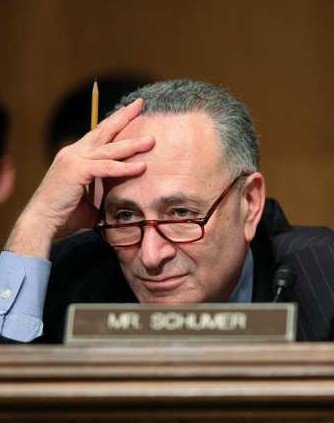
Did Schumer Shill for Madoff? AND Kevin MacDonald on Marine LePen Plus 2 blogs


--


Thank you and remember: 

Peace is patriotic!

Michael Santomauro
253 W. 72nd Street
New York, NY 10023

Call anytime: 917-974-6367

E-mail me anything:
ReporterNotebook@Gmail.com

__._,_.___
Recent Activity:
.

__,_._,___