Aug 9, 2014


“Amazon-Hachette Debate Yields Diverse Opinions Among Authors”
From: Kindle Direct Publishing <kdp-support@amazon.com>
Date: Sat, Aug 9, 2014 at 3:01 AM
Dear KDP Author,
Just ahead of World War II, there was a radical invention that shook the foundations of book publishing. It was the paperback book. This was a time when movie tickets cost 10 or 20 cents, and books cost $2.50. The new paperback cost 25 cents – it was ten times cheaper. Readers loved the paperback and millions of copies were sold in just the first year.
With it being so inexpensive and with so many more people able to afford to buy and read books, you would think the literary establishment of the day would have celebrated the invention of the paperback, yes? Nope. Instead, they dug in and circled the wagons. They believed low cost paperbacks would destroy literary culture and harm the industry (not to mention their own bank accounts). Many bookstores refused to stock them, and the early paperback publishers had to use unconventional methods of distribution – places like newsstands and drugstores. The famous author George Orwell came out publicly and said about the new paperback format, if “publishers had any sense, they would combine against them and suppress them.” Yes, George Orwell was suggesting collusion.
Well… history doesn’t repeat itself, but it does rhyme.
Fast forward to today, and it’s the e-book’s turn to be opposed by the literary establishment. Amazon and Hachette – a big US publisher and part of a $10 billion media conglomerate – are in the middle of a business dispute about e-books. We want lower e-book prices. Hachette does not. Many e-books are being released at $14.99 and even $19.99. That is unjustifiably high for an e-book. With an e-book, there’s no printing, no over-printing, no need to forecast, no returns, no lost sales due to out of stock, no warehousing costs, no transportation costs, and there is no secondary market – e-books cannot be resold as used books. E-books can and should be less expensive.
Perhaps channeling Orwell’s decades old suggestion, Hachette has already been caught illegally colluding with its competitors to raise e-book prices. So far those parties have paid $166 million in penalties and restitution. Colluding with its competitors to raise prices wasn’t only illegal, it was also highly disrespectful to Hachette’s readers.
The fact is many established incumbents in the industry have taken the position that lower e-book prices will “devalue books” and hurt “Arts and Letters.” They’re wrong. Just as paperbacks did not destroy book culture despite being ten times cheaper, neither will e-books. On the contrary, paperbacks ended up rejuvenating the book industry and making it stronger. The same will happen with e-books.
Many inside the echo-chamber of the industry often draw the box too small. They think books only compete against books. But in reality, books compete against mobile games, television, movies, Facebook, blogs, free news sites and more. If we want a healthy reading culture, we have to work hard to be sure books actually are competitive against these other media types, and a big part of that is working hard to make books less expensive.
Moreover, e-books are highly price elastic. This means that when the price goes down, customers buy much more. We've quantified the price elasticity of e-books from repeated measurements across many titles. For every copy an e-book would sell at $14.99, it would sell 1.74 copies if priced at $9.99. So, for example, if customers would buy 100,000 copies of a particular e-book at $14.99, then customers would buy 174,000 copies of that same e-book at $9.99. Total revenue at $14.99 would be $1,499,000. Total revenue at $9.99 is $1,738,000. The important thing to note here is that the lower price is good for all parties involved: the customer is paying 33% less and the author is getting a royalty check 16% larger and being read by an audience that’s 74% larger. The pie is simply bigger.
But when a thing has been done a certain way for a long time, resisting change can be a reflexive instinct, and the powerful interests of the status quo are hard to move. It was never in George Orwell’s interest to suppress paperback books – he was wrong about that.
And despite what some would have you believe, authors are not united on this issue. When the Authors Guild recently wrote on this, they titled their post: “Amazon-Hachette Debate Yields Diverse Opinions Among Authors” (the comments to this post are worth a read). A petition started by another group of authors and aimed at Hachette, titled “Stop Fighting Low Prices and Fair Wages,” garnered over 7,600 signatures. And there are myriad articles and posts, by authors and readers alike, supporting us in our effort to keep prices low and build a healthy reading culture. Author David Gaughran’s recent interview is another piece worth reading.
We recognize that writers reasonably want to be left out of a dispute between large companies. Some have suggested that we “just talk.” We tried that. Hachette spent three months stonewalling and only grudgingly began to even acknowledge our concerns when we took action to reduce sales of their titles in our store. Since then Amazon has made three separate offers to Hachette to take authors out of the middle. We first suggested that we (Amazon and Hachette) jointly make author royalties whole during the term of the dispute. Then we suggested that authors receive 100% of all sales of their titles until this dispute is resolved. Then we suggested that we would return to normal business operations if Amazon and Hachette’s normal share of revenue went to a literacy charity. But Hachette, and their parent company Lagardere, have quickly and repeatedly dismissed these offers even though e-books represent 1% of their revenues and they could easily agree to do so. They believe they get leverage from keeping their authors in the middle.
We will never give up our fight for reasonable e-book prices. We know making books more affordable is good for book culture. We’d like your help. Please email Hachette and copy us.
Hachette CEO, Michael Pietsch: Michael.Pietsch@hbgusa.com
Copy us at: readers-united@amazon.com
Please consider including these points:
- We have noted your illegal collusion. Please stop working so hard to overcharge for ebooks. They can and should be less expensive.
- Lowering e-book prices will help – not hurt – the reading culture, just like paperbacks did.
- Stop using your authors as leverage and accept one of Amazon’s offers to take them out of the middle.
- Especially if you’re an author yourself: Remind them that authors are not united on this issue.
Thanks for your support.
The Amazon Books Team
P.S. You can also find this letter at www.readersunited.com
Date: Sat, Aug 9, 2014 at 3:01 AM
Dear KDP Author,
Just ahead of World War II, there was a radical invention that shook the foundations of book publishing. It was the paperback book. This was a time when movie tickets cost 10 or 20 cents, and books cost $2.50. The new paperback cost 25 cents – it was ten times cheaper. Readers loved the paperback and millions of copies were sold in just the first year.
With it being so inexpensive and with so many more people able to afford to buy and read books, you would think the literary establishment of the day would have celebrated the invention of the paperback, yes? Nope. Instead, they dug in and circled the wagons. They believed low cost paperbacks would destroy literary culture and harm the industry (not to mention their own bank accounts). Many bookstores refused to stock them, and the early paperback publishers had to use unconventional methods of distribution – places like newsstands and drugstores. The famous author George Orwell came out publicly and said about the new paperback format, if “publishers had any sense, they would combine against them and suppress them.” Yes, George Orwell was suggesting collusion.
Well… history doesn’t repeat itself, but it does rhyme.
Fast forward to today, and it’s the e-book’s turn to be opposed by the literary establishment. Amazon and Hachette – a big US publisher and part of a $10 billion media conglomerate – are in the middle of a business dispute about e-books. We want lower e-book prices. Hachette does not. Many e-books are being released at $14.99 and even $19.99. That is unjustifiably high for an e-book. With an e-book, there’s no printing, no over-printing, no need to forecast, no returns, no lost sales due to out of stock, no warehousing costs, no transportation costs, and there is no secondary market – e-books cannot be resold as used books. E-books can and should be less expensive.
Perhaps channeling Orwell’s decades old suggestion, Hachette has already been caught illegally colluding with its competitors to raise e-book prices. So far those parties have paid $166 million in penalties and restitution. Colluding with its competitors to raise prices wasn’t only illegal, it was also highly disrespectful to Hachette’s readers.
The fact is many established incumbents in the industry have taken the position that lower e-book prices will “devalue books” and hurt “Arts and Letters.” They’re wrong. Just as paperbacks did not destroy book culture despite being ten times cheaper, neither will e-books. On the contrary, paperbacks ended up rejuvenating the book industry and making it stronger. The same will happen with e-books.
Many inside the echo-chamber of the industry often draw the box too small. They think books only compete against books. But in reality, books compete against mobile games, television, movies, Facebook, blogs, free news sites and more. If we want a healthy reading culture, we have to work hard to be sure books actually are competitive against these other media types, and a big part of that is working hard to make books less expensive.
Moreover, e-books are highly price elastic. This means that when the price goes down, customers buy much more. We've quantified the price elasticity of e-books from repeated measurements across many titles. For every copy an e-book would sell at $14.99, it would sell 1.74 copies if priced at $9.99. So, for example, if customers would buy 100,000 copies of a particular e-book at $14.99, then customers would buy 174,000 copies of that same e-book at $9.99. Total revenue at $14.99 would be $1,499,000. Total revenue at $9.99 is $1,738,000. The important thing to note here is that the lower price is good for all parties involved: the customer is paying 33% less and the author is getting a royalty check 16% larger and being read by an audience that’s 74% larger. The pie is simply bigger.
But when a thing has been done a certain way for a long time, resisting change can be a reflexive instinct, and the powerful interests of the status quo are hard to move. It was never in George Orwell’s interest to suppress paperback books – he was wrong about that.
And despite what some would have you believe, authors are not united on this issue. When the Authors Guild recently wrote on this, they titled their post: “Amazon-Hachette Debate Yields Diverse Opinions Among Authors” (the comments to this post are worth a read). A petition started by another group of authors and aimed at Hachette, titled “Stop Fighting Low Prices and Fair Wages,” garnered over 7,600 signatures. And there are myriad articles and posts, by authors and readers alike, supporting us in our effort to keep prices low and build a healthy reading culture. Author David Gaughran’s recent interview is another piece worth reading.
We recognize that writers reasonably want to be left out of a dispute between large companies. Some have suggested that we “just talk.” We tried that. Hachette spent three months stonewalling and only grudgingly began to even acknowledge our concerns when we took action to reduce sales of their titles in our store. Since then Amazon has made three separate offers to Hachette to take authors out of the middle. We first suggested that we (Amazon and Hachette) jointly make author royalties whole during the term of the dispute. Then we suggested that authors receive 100% of all sales of their titles until this dispute is resolved. Then we suggested that we would return to normal business operations if Amazon and Hachette’s normal share of revenue went to a literacy charity. But Hachette, and their parent company Lagardere, have quickly and repeatedly dismissed these offers even though e-books represent 1% of their revenues and they could easily agree to do so. They believe they get leverage from keeping their authors in the middle.
We will never give up our fight for reasonable e-book prices. We know making books more affordable is good for book culture. We’d like your help. Please email Hachette and copy us.
Hachette CEO, Michael Pietsch: Michael.Pietsch@hbgusa.com
Copy us at: readers-united@amazon.com
Please consider including these points:
- We have noted your illegal collusion. Please stop working so hard to overcharge for ebooks. They can and should be less expensive.
- Lowering e-book prices will help – not hurt – the reading culture, just like paperbacks did.
- Stop using your authors as leverage and accept one of Amazon’s offers to take them out of the middle.
- Especially if you’re an author yourself: Remind them that authors are not united on this issue.
Thanks for your support.
The Amazon Books Team
P.S. You can also find this letter at www.readersunited.com
Aug 8, 2014
Australian PM Caves in to Jewish Lobby on Free Speech Laws
Australian PM Caves in to Jewish Lobby on Free Speech Laws
Brenton Sanderson
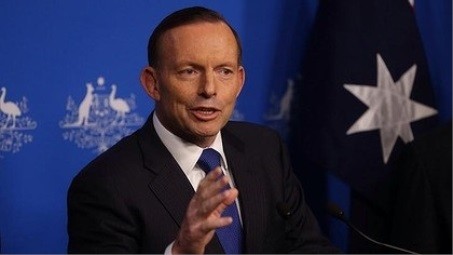
Australian Prime Minister John Abbott
In the face of a coordinated and sustained campaign initiated and led by Jewish activists, the Australian Prime Minister Tony Abbott has abandoned his 2013 election promise to water down or remove Section 18C of Australia’s Racial Discrimination Act which makes it unlawful to act in a manner likely to “offend, insult, humiliate or intimidate” someone on the basis of race. Abbott said he had made a “leadership decision” to walk away from his pledge despite having promised to remove this outrageous restriction on the free speech after the law was used successfully against conservative columnist Andrew Bolt in 2011. It is a measure of the power wielded by organized Jewry in Australia that the Prime Minister would rather damage his political credibility by breaking a clear election promise than suffer the consequences of defying the single most powerful group in Australian society. Abbott, who made the announcement while outlining an extension of anti-terrorism laws, attempted to justify his broken promise by claiming “I don’t want to do anything that puts our national unity at risk at this time and so those proposals are now off the table.” Abbott’s apparent desire to not further alienate Australia’s problematic Islamic community by repealing Section 18C (at a time when the government is set to strengthen laws against terrorism) is an obvious political smokescreen. The veteran Jewish journalist, Michael Gawenda, writing in the Business Spectator, identified the real reason behind the Prime Minister walking away from his election commitment:
While Abbott said that the decision to ditch the plan to rid the Racial Discrimination Act of section 18C was taken because of “complications” in dealing with Islamic communities in the context of the proposed tough new terrorism laws, it seems likely that more was involved in this decision. The conflict in Gaza and the coverage and reaction to this appalling, heartbreaking conflagration, in my opinion, made it virtually certain that any move to change or abolish section 18C would extract too high a political price. The repeal of section 18C was vigorously opposed by the leadership of virtually every ethnic community in the country. But it would be fair to say — without wishing to give succor to those who reckon the Jews are too powerful — that Jewish community leaders have played a crucial role in organizing the opposition to any potential change to the RDA. It is the opposition of the Jewish communal leaders that had been of major concern to [Attorney General] Brandis and, to a significant extent, Tony Abbott.

Gawenda notes that the Jewish community’s overwhelming support for Section 18C (which was itself originally the legislative result of submissions by organized Jewry to the National Inquiry into Racist Violence and the Royal Commission into Aboriginal Deaths in Custody in 1995) is linked to the broader Jewish commitment to “multiculturalism” in Australia.
The main reason that Brandis and Abbott were most concerned about the opposition of the Jewish communal leadership to any changes to section 18C is because the Jewish community is generally seen as a role model for successful multiculturalism. It is for these reasons that the Jewish communal leadership has played such an outsized role in the campaign against the watering down or elimination of section 18C. If the Jewish community is a prime example of successful multiculturalism, then its support for the retention of 18C, its highly effective campaign against any change to the RDA on the basis that any change would seriously undermine multiculturalism and free the racists to say whatever they please, represented serious political pain for Brandis and Abbott.
Gawenda is disingenuous in claiming that the source of the Jewish community’s power in this debate resides in its being a “role model for successful multiculturalism” rather than in its status as a group with the kind of financial, political and media clout to instil genuine fear in those who oppose its interests. As in the United States, Jewish money exerts a dominating influence over Australian politics, which guarantees that most politicians are willing to put the Australian Defense Forces (and Australian taxpayers) to the service of an ethno-nationalist state in which Australia has no economic or strategic interest. The Jewish academic and activist Dan Goldberg acknowledges that: “The annual report of the Australian Electoral Commission always includes Jewish names and Jewish-owned companies donating large sums to both sides of politics.”[i] The sway held by organized Jewry over Australia’s political leaders was highlighted earlier this year when the former Foreign Minister Bob Carr hit out at the “pro-Israel lobby in Melbourne,” saying it wielded “extraordinary influence” on Australia’s foreign policy during his time in former Prime Minister Julia Gillard’s cabinet.Asked how the lobby achieved this influence he said: “I think party donations and a program of giving trips to MPs and journalists to Israel. But that’s not to condemn them. I mean, other interest groups do the same thing. But it needs to be highlighted because I think it reached a very unhealthy level.” Carr’s observations were later corroborated by the former Australian Prime MinisterMalcolm Fraser who said Carr was “absolutely correct” in his view that the Jewish lobby wielded too much power. Gawenda asserts that, unlike the vast majority of Australian Jews, he was originally in favor of the proposal to water down Section 18C of the Act until recent events gave him pause for thought: in particular the widespread criticism of Israel and its supporters for their attempts to justify the appalling massacre of Palestinian civilians in Gaza:
But here’s the thing. I believe that in recent days, in the light of what has been published about Jews and the conflict in Gaza, the clearly anti-Semitic cartoon in the Sydney Morning Herald, for instance — for which the SMH has issued an apology in an editorial that I found unsatisfactory —\ not to mention the astounding amount of outright racist filth to be found on social media, it may no longer be the case that we can trust editors and executive producers when it comes to ensuring that what amounts to vilification is not given any room in mainstream commentary and analysis.
So, for Gawenda, the recent (and entirely legitimate) criticism of the actions of the ethno-nationalist state of Israel and its Zionist cheerleaders in the West only serves to confirm that Jewish leaders were right to oppose any changes to Section 18C. The criticism of the Israeli government and those who would defend its barbarity in Gaza simply confirms for Gawenda that Australians cannot be trusted with unfettered free speech. Incidentally, the supposedly “anti-Semitic” cartoon in the Sydney Morning Herald to which he refers is less an anti-Semitic caricature and more an accurate representation of actual events — of Israeli citizens sitting outside to watch and cheer the bombing of the helpless Palestinian civilians as entertainment.

The “anti-Semitic” Sydney Morning Herald cartoon

An “anti-Semitic” photograph?
Likewise, for the Australian Jewish academic and activist Danny Ben-Moshe, the slaughter in Gaza “has led to the crossing of new anti-Semitic thresholds with the potential to take us down a dangerous path. It is a path not laid with guns and bullets, but with loose and manipulative language.” According to Gawenda, it was the sudden outbreak of truth-telling about Israel and the dishonesty of its apologists that reinvigorated the campaign by Australian Jewish leaders to oppose any changes to Section 18C of the Racial Discrimination Act:
It is this that made Jewish community leaders more determined than ever to oppose any change to section 18C of the Racial Discrimination Act. And in the main, Jews in Australia support the communal leadership on this issue. No one can doubt that there has been an alarming rise in anti-Semitism in Europe, something that is hardly reported in most of the Australian media. Jews feel under threat — in some cases physical threat — in France and Belgium and Germany and even in England. Not to mention Hungary, where an openly anti-Semitic party has garnered significant support. Thousands of French Jews have left France for Israel and other places. The numbers leaving every month are growing.Though there has not been a similar rise in virulent anti-Semitism in Australia, Jews in Australia nevertheless have good reason to believe that if the virus of anti-Semitism is spreading in Europe, it might one day reach these shores. In this environment, Tony Abbott decided that the plan to change section 18C, a solemn promise he had made to Bolt and to his supporters at the Institute of Public Affairs had to be abandoned. Will there be a better political time to resurrect these proposed changes? Almost certainly not.
Note the standard pathologization of anti-Jewish sentiment as a “virus” that has nothing whatever to do with Jewish behavior. On the other hand, the reflexive Jewish hostility toward Europeans (which has led to the demographic transformation of Western nations over the last few decades) is apparently not a virus, but stems, rather, from some highly developed sense of fairness and universal brotherhood that is inherent in all Jews. Of course, what Gawenda won’t acknowledge is that the only reason Jews are increasingly subject to anti-Semitic attacks in countries like France and England is because of mass non-White (particularly Muslim) immigration and multiculturalism — both of which are the malignant outgrowths of Jewish ethnic activism. A disappointedAndrew Bolt observed that Jewish leaders would ultimately regret opposing changes to the Act, noting that: “The Jewish leaders now should look very, very deeply into their souls at what they have helped wrought and ask themselves, are you seriously safer now as a result?” Bolt’s reasoning is that under Section 18C Australian Jews will in future be precluded from criticizing the beliefs and actions of a growing and increasingly militant Australian Islamic community which will be increasingly hostile to Israel and the interests of Australian Jews. As with Gawenda, Bolt fails to mention that the only reason there are any Muslims in Australia at all (with all their myriad problems and social dysfunctions) is because Jewish activism succeeded in ending the White Australia policy and establishing multiculturalism as the basis for social policy in Australia. As The Jewish academic Dan Goldberg proudly acknowledges: “In addition to their activism on Aboriginal issues, Jews were instrumental in leading the crusade against the White Australia policy, a series of laws from 1901 to 1973 that restricted non-White immigration to Australia.” It is clear that the Jewish fear and loathing of White Australia trumps any concern about the anti-Semitic tendencies among non-White immigrants that are being imported into the nation. The Jewish writer Peta Jones-Pellach is not alone in expressing the view that Australian Jews should always back the Muslim minority in any conflict with White Australia, arguing that “We recognize that our ongoing harmonious acceptance into the Australian community depends on forging bonds with the increasing numbers of non-Jewish Australians who might be our theological opponents or even our enemies.”[ii] The supposed benefits to Australian Jewry that multiculturalism has bestowed – most notably the diminished threat of the emergence of a mass movement of anti-Semitism from White Australians — is seen as having far outweighed any negative effects of large scale Islamic immigration such as the fact that: “Some Australian Jews fear that migrants arriving from Muslim countries will contribute to anti-Semitic currents in Australia, inflame extremist groups and pose a threat to the relative peace they currently enjoy.”[iii] The rise of Islamic anti-Semitism in the West reveals a paradoxical element of the overwhelming Jewish support for multiculturalism; an element which resulted in the emergence and growth of neoconservatism. Kevin MacDonald notes that: “Although multiculturalist ideology was invented by Jewish intellectuals to rationalize the continuation of separatism and minority-group ethnocentrism in a modern Western state, several of the recent instantiations of multiculturalism may eventually produce a monster with negative consequences for Judaism.”[iv] Australian Jewish activists like Dan Goldberg recognize the danger, and he notes that:
Herein lies an underlying tension that exists in the psyche of Australian Jews in the new millennium: on the one hand understanding the fundamental wrong in tarring all Muslims with the same extremist brush; on the other hand feeling great unease in showing support for Muslims, some of whose brothers are waging jihad against Israel and the Jews. … Many Australian Jews are therefore caught between these tides, ostensibly supportive of minority rights but cognizant of the fact that among the Muslim community are radical elements who seek our destruction. [v]
Despite these concerns, most Australian Jews see themselves as the longer-term beneficiaries of policies explicitly designed to dilute the power of the traditional European-derived Australian majority. Australian Jewry has therefore sought to make alliances with various immigrant groups in opposition to the White majority, including Muslims. Attempts to form a political coalition with Australian Muslims date from the earliest days of Australian multiculturalism. Australian Jews sought Muslim support for the enactment of the racial discrimination legislation recommended by the Lippmann-chaired Committeeon Community Relations in the mid-1970s. In the years since, Jews have repeatedly sought the support of the Muslim community in lobbying for various multicultural policies, including those relating to “access to government services, recourse for victims of discrimination, and protection from harassment.” Jewish activism organizations such as the Australia/Israel & Jewish Affairs Council was quick to enlist Australia’s Muslim leaders in their campaign to oppose any changed to Section 18C of the Racial Discrimination Act. According to Jeremy Jones, the director of international and community affairs of the Australia/Israel & Jewish Affairs Council, “the relationship between Australian Jews and Muslims has developed positively over the past decade.” Nevertheless, he believes that “maintaining the momentum will require leadership and determination, but there are good grounds for optimism given the network of relations and shared fruitful experiences in contemporary multicultural Australia.” Clearly, Australian Jewry believes that, despite the threat to Jews represented by the strong anti-Jewish sentiment in growing sections of the Australian Islamic community, the relationship is basically manageable in the longer-term. Having won the battle over Section 18C, it is certain that activist Jews will push for even tougher restrictions on freedom of speech in Australia, and indeed throughout the West. The attempt to confine public discourse to within parameters that do not threaten Jewish interests has been a central preoccupation of Jewish activists for many decades. American Jewish activist organizations like the ADL and the SPLC certainly do not view the American constitution as an insuperable barrier to the imposition of laws like to Section 18C in the United States. ——————- [i] Goldberg, D. (2006) ‘After 9/11: The Psyche of Australian Jews,’ In: New Under the Sun – Jewish Australians on Religion, Politics & Culture, Ed. Michael Fagenblat, Melanie Landau & Nathan Wolski, Black Inc., Melbourne. 151 [ii] Peta Jones Pellach, “Interfaith Dialogue and the State of Israel,” In: New Under the Sun – Jewish Australians on Religion, Politics & Culture, Ed. Michael Fagenblat, Melanie Landau & Nathan Wolski (Melbourne, Black Inc., 2006), 139. [iii] Marcus Einfeld, “We Too Have Been Strangers: Jews and the Refugee Struggle,” In: New Under the Sun – Jewish Australians on Religion, Politics & Culture, Ed. Michael Fagenblat, Melanie Landau & Nathan Wolski (Melbourne: Black Inc., 2006), 311 & 314. [iv] MacDonald, The Culture of Critique: An Evolutionary Analysis of Jewish Involvement in Twentieth‑Century Intellectual and Political Movements, (Westport, CT: Praeger, Revised Paperback edition, 2001), 313. [v] Goldberg “After 9/11: The Psyche of Australian Jews,” 145 & 146


Subscribe to:
Posts (Atom)
